Product Information Management (PIM)
Designing a Scalable, Usable Product Data System
UI/UX
Product Design
Retail
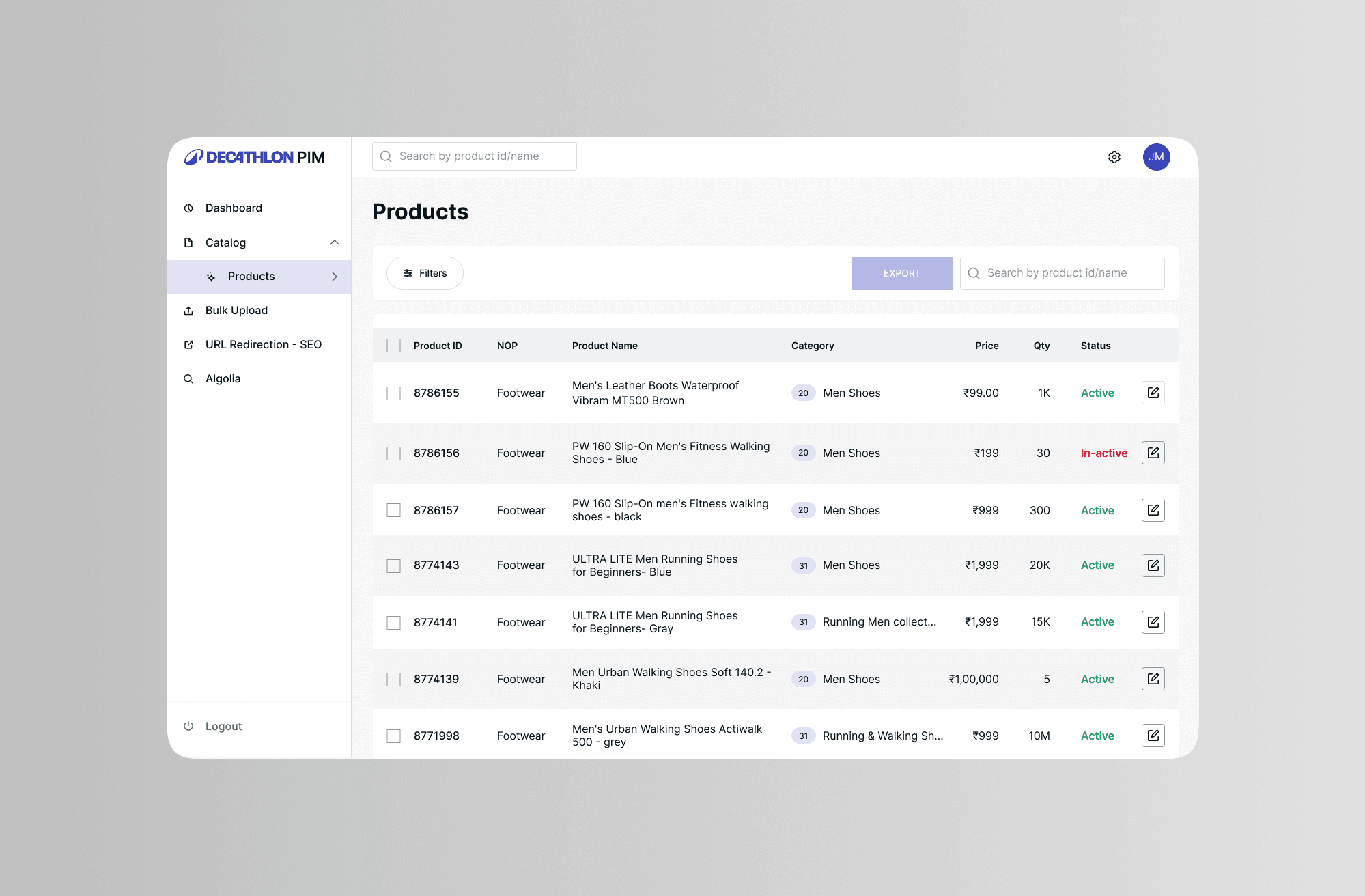
Overview
Redesigned the Product Information Management (PIM) system to improve usability, efficiency, and data workflows for internal teams managing large-scale product catalogs.
Role: Lead Product Designer
Platform: Web (Back Office)
Scope: End-to-end UX for product data management
Problem
Complex workflows increased task completion time
High error rates in product data entry and updates
Poor visibility of product status and validation issues
High dependency on support for routine operations
Impact: Reduced team efficiency and delayed product readiness
Goal
Reduce time and effort to manage product data
Improve accuracy and confidence in workflows
Simplify complex product management journeys
Enhance adoption and usability for internal teams
Approach
Workflow Simplification: Streamlined product lifecycle — Ingestion → Validation → Enrichment → Publishing
Information Architecture: Structured product attributes and categories for better discoverability
Error Prevention: Introduced validation states and inline error feedback
UX Improvements: Reduced cognitive load through clearer hierarchy and guided flows
System Feedback: Improved visibility of product status and sync states
Impact
Efficiency
↓ 35–45% reduction in product creation & update time
↓ 30% fewer clicks to complete key workflows
↓ 40% reduction in dependency on support teams
Accuracy
↓ 50% reduction in data entry errors
↑ improved validation success rate through inline feedback
Adoption & Usability
↑ 25% increase in task success rate
↑ faster onboarding for new merchandisers
↑ Improved confidence in managing complex product data
Key Takeaway
Improving internal tools through better UX directly impacts team productivity, data quality, and operational speed, making it as critical as customer-facing design.